Robert's first workshop was a garage at home. His second was a garden shed. More than 50 years later, his team has built the copper coils inside 120 electric motors for a nuclear power station in South Africa. Robert Walker turns 81 in January and, as Managing Director of E.M.R International, still oversees the business he started in Weston-super-Mare. He built it on grit, a trade he knows inside out and the most loyal of teams.


Going it alone
Robert started out by doing an apprenticeship in Weston-super-Mare. Then the man who had trained him shut the business down, and Robert was immediately out of a job. So, in September 1973, he started working for himself. He began in a garage at home, then moved on to a garden shed at his next house. Early customers included bigger firms with small rewinding jobs they didn't do themselves, and some of his work came from the mining pits of South Wales. In February 1974, he took on his first employee, Dave. Two years later came an apprentice. “It's gone from there,” he says.
What EMR does
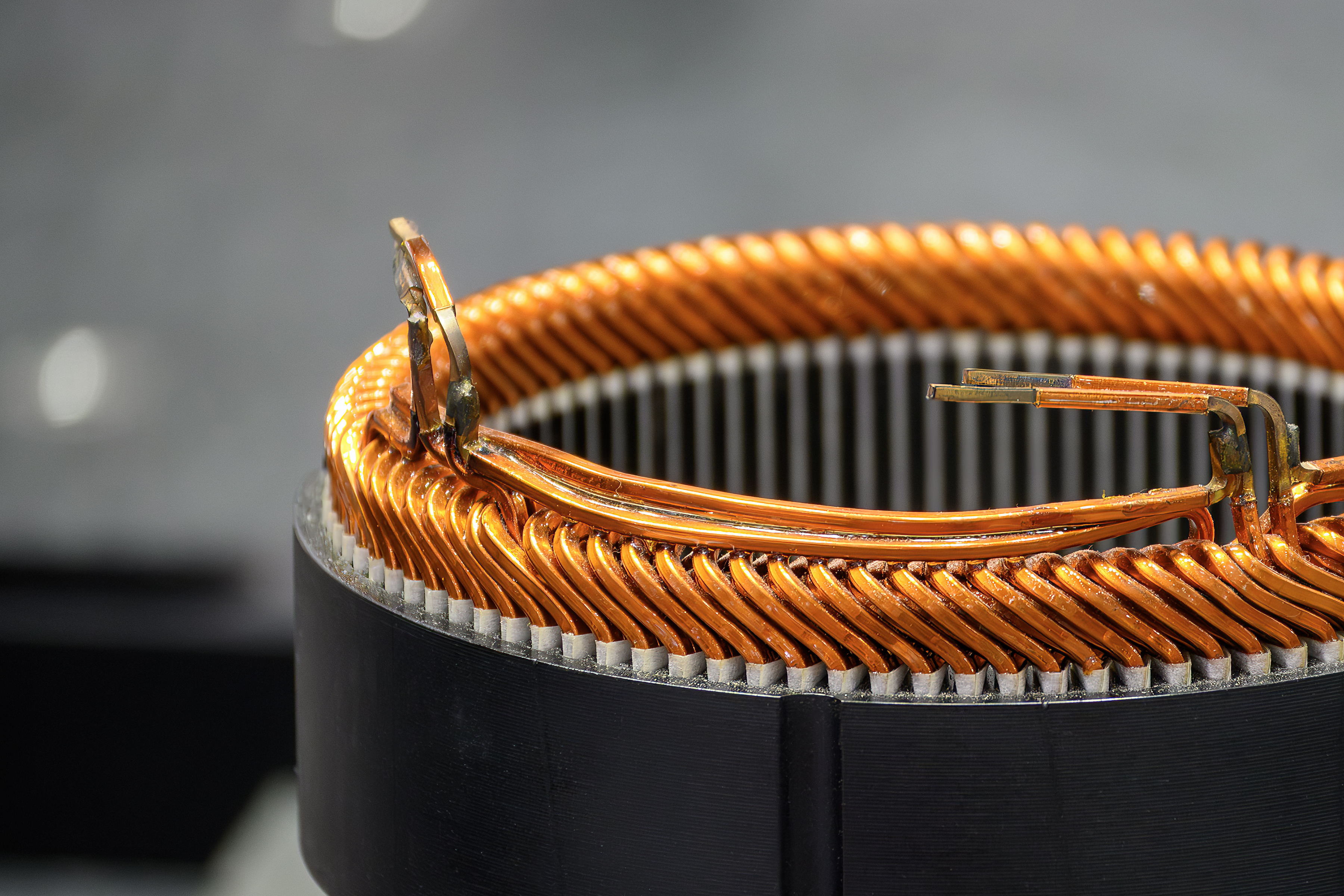
E.M.R winds copper wire into coils, and coils are what make electric motors and transformers work. The business does this in two ways. On the rewinding side, it repairs and rebuilds electric motors by stripping out the worn copper and winding in new. On the electronics side, it makes small coils and transformers that go inside other companies' products.
The rewinding work has taken E.M.R a long way from that garden shed. Robert's team does this work for a major UK maker of actuators, the devices that open and close valves in oil, gas and water plants, and the equipment ends up in places like refineries in Saudi Arabia. Last year's work included those 120 motors for the nuclear power station in South Africa, which are installed and running now. Much of the work is urgent. “We want that by the end of next week,” is how Robert describes a typical request.
One big family
E.M.R's people tend to stay. “The people that work for us, they've been with us for so long, it's like one big family,” Robert says. Recently, the longest-serving member of the team retired after close to 50 years. Another colleague has been there for around 48 years, and he joined straight from school. Most of the rest have clocked up between 25 and 30 years. Robert reckons the current team's combined service comes to nearly 200 years, and that’s not counting everyone who has come and gone along the way. Day to day, two managers run the rewinding and electronics sides, and Robert says he keeps himself busy.
A tougher market
It hasn't all been smooth. For more than 40 years, E.M.R wound a part for one customer. Then, without warning, that work moved to China, where high-volume jobs can be done for a price E.M.R can't match. “We never had a clue that any of this was going to happen,” Robert says. “You get completely used to it, and then it's suddenly shaken.” E.M.R still does business with the customer, but the work is lower volume.
The business is getting leaner as a result, and Robert is practical about it. Wages are the biggest cost, he says, and he thinks a smaller, more focused business could be better off.
A bit of breathing room
Cash flow was the pressure point. Buying from China means paying up front, and the bank's overdraft limit didn't stretch far enough to cover it. Go over it, Robert says, and the bank starts reversing payments. That's where Chris at Binq came in. “I love Chris. He's great – very, very helpful,” says Robert. The funding has given E.M.R more of a buffer. “It's kept us under our limit to where we wanted to be,” Robert says, and he sees it as a way “to fill in a gap temporarily” while the business gets back to making extra profit.
Top tips
Asked what advice he'd give someone starting out, Robert is modest. “I don't think I'm qualified enough to answer that,” he says. But he does have a view on borrowing. “I think borrowing money is fine to start with,” he says, as long as you have work coming in to cover it. If you take on funding, make sure you've got a contract with a customer to support it, because work you rely on can disappear. In other words, expect the unexpected, and Robert agrees. “That's the point I'm trying to make,” he says.
Ask Robert what he's proudest of, and he points to the companies he's worked with and what he's helped build. Back in the early 1980s, he developed coils for a company that makes cable locators, the handheld devices crews use to trace buried cables. E.M.R bought the machines and, as Robert puts it, “away we went.” The product went on to be sold around the world. “We're still manufacturing some of those products 40 years later, as we speak,” he says. And, at nearly 81, he's proud of all of it. “I'm always quite proud of what I built.”