For Ruskin Clothing, great retail is about more than selling clothes. It’s carefully curating pieces that last, creating a community and building a business that feels true to the people behind it. Family run in the seaside town of Whitstable, Ruskin is proof that doing things properly and ethically works. And their funding story shows how a business loan can pay for itself, too.


Tell us about Ruskin clothing in your own words. What would we find if we walked through the door of your store on Harbor Street?
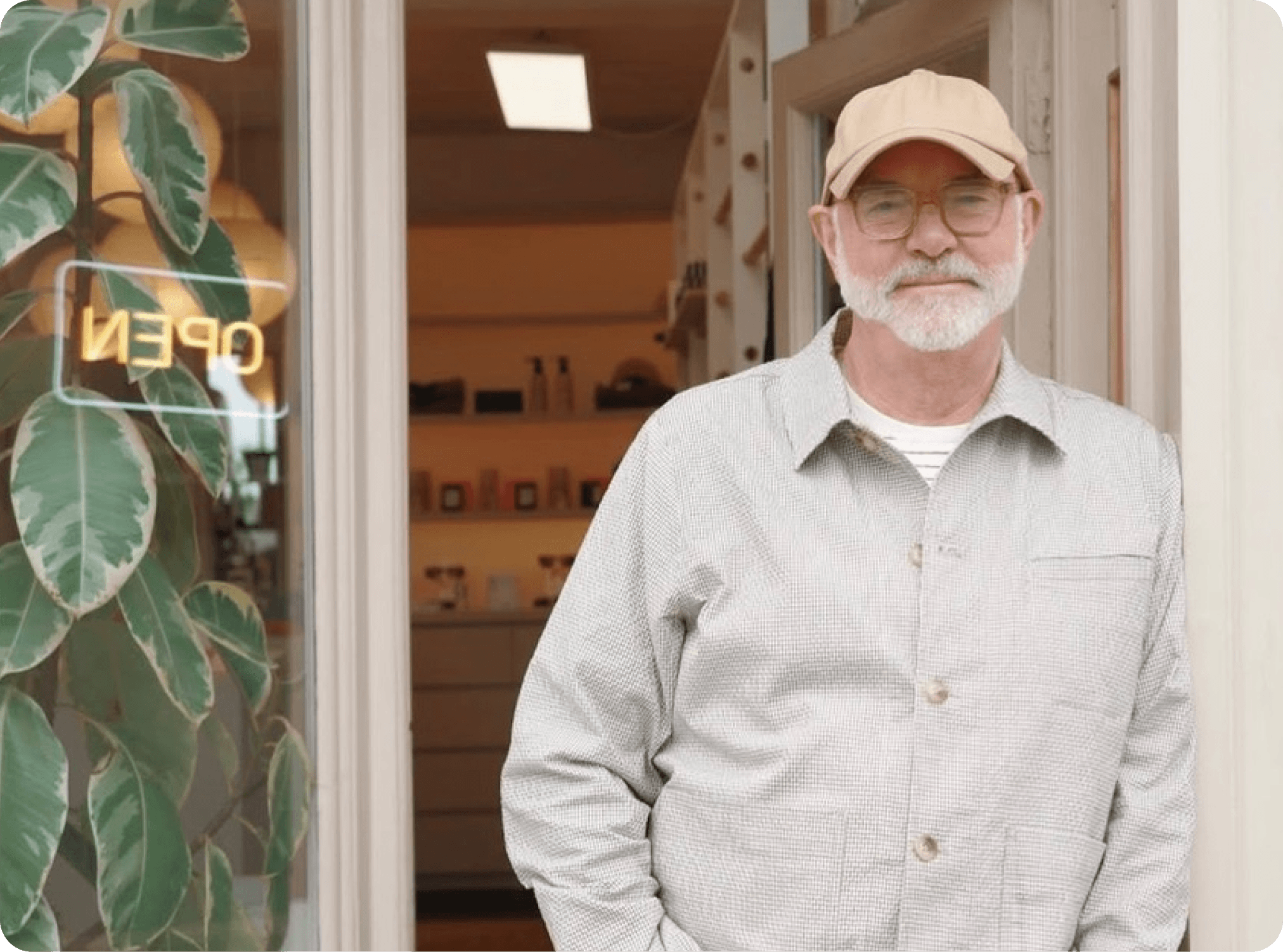
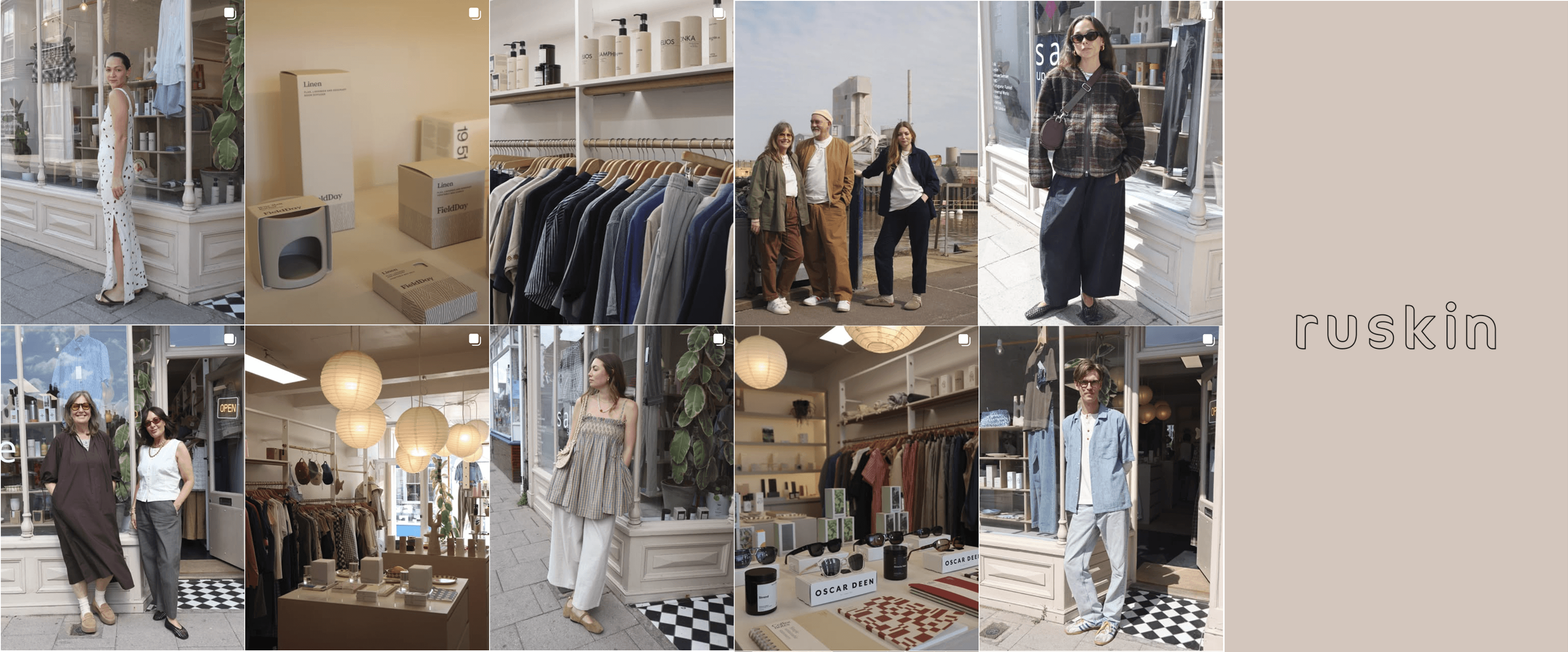
I think of us as an independent mini department store. We’ve got several men’s and women’s brands and if you wanted to find these brands in London you’d have to go various different shops. We’ve chosen our own edit of the brands we offer and each and every piece is carefully curated. My wife Shelly and daughter Isobel do all the buying and find exactly the pieces that they love and know our customers are going to want.
We take pride in creating a welcoming and friendly environment for our regulars, our visitors and even their dogs! We love our youngest visitors too and have a box of toys and puzzles to keep them entertained while the grownups shop.
We offer a personalised shopping experience to our customers too, with ready advice on styling - something we really enjoy.
How did the idea for Ruskin come about?
Shelly used to have a gift shop in Whitstable and I’d had a corporate job working for Coca-Cola for 20 years. I was also running a holiday cottage business, and I didn’t want to juggle it all anymore. We’d been talking about the idea for a while and one day we sort of just said, ‘No one else is doing this - should we just do it?’ It started off as a men’s only shop. It was in that kind of post Peaky Blinders, tweed, baker boy hat era. And we rode that curve a bit with various iterations. And then about a year after opening, the women in Whitstable had been saying to us, ‘We love what you’re doing, please can you start selling clothes for us?’ And so that’s what we did.
Once you’d decided to go for it, what did you do to actually turn your dream into a business?
There were a few things that lined up in our favour. When our daughter was at Edinburgh University studying theatre costume design, while we were visiting we were introduced to Kestin Hare who had a shop in Stockbridge. After that, everything just sort of clicked. We bought into the tail end of his Spring/Summer collection and, at the same time, Shelly had been talking to a friend who no longer wanted to be in retail and said that we could take on her shop. And within 3 months we opened the shop.
Is Ruskin a family business?
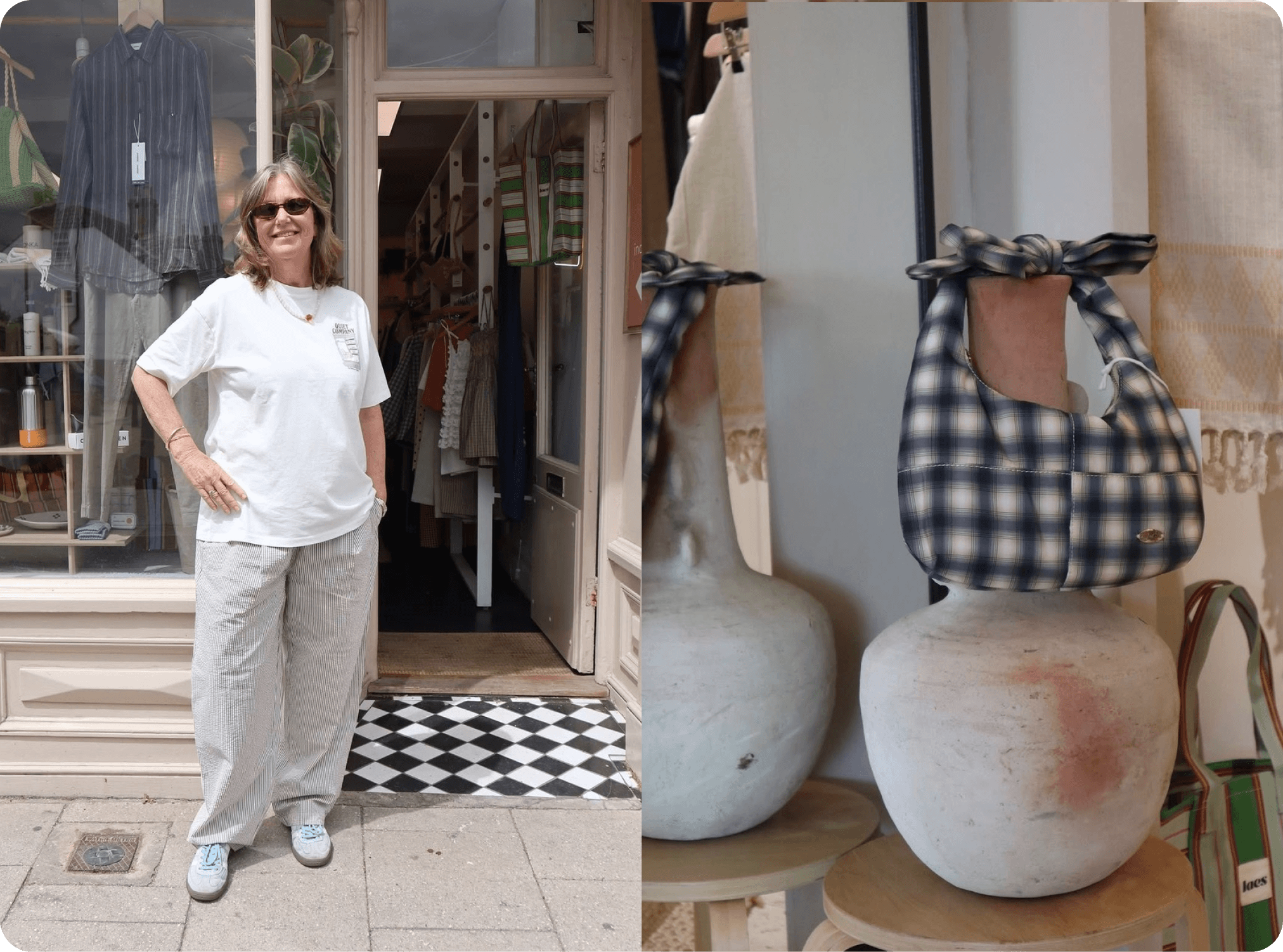
Yes, my wife Shelly and daughter Isobel do all the buying and we all work together. Plus we’ve got three permanent members of staff and they’re more than shop assistants, they’re part of the team. And, like my daughter Isobel, they’re very, very good on social media. We’ve got 10.4K followers on Instagram @Ruskin_clothing . We’re more than just a shop – we’re a community.
Isobel also has her own shop just opposite Ruskin called And Danu, and our eldest daughter runs an amazing Bakery called Oast in Margate. We all have a similar lifestyle and understand the joys and difficulties of running your own business, making us a tight unit.
What's your role in the family business day-to-day?
My main job is the finances but on top of that I’m also a bit of a go-to handyman and do a bit of everything. The shop fit is all our own design and I do the electrics, the woodwork. I fix the toilet. Maybe take the rubbish to the tip. I do get involved in the buying a little bit but my main role is finance with a bit of handyman on the side, which I know is a rare combination.
What are the ups and downs of running a family business?
I suppose the trouble is that you can’t get away from it. I’m not meant to be working today, but I’ve got the laptop on my lap and no doubt Shelly will come in after walking the dog and we’ll end up talking about plans for the business. Sometimes it’s hard to know when and how to take a break and that does take a toll. But aside from that it’s honestly a joy and I’d never go back to commuting around the M25 in a corporate job.
Tell us about the shopping scene in Whitstable. Why has the business worked there?
Whitstable is a fantastic place – it’s a dinky little town that’s full of independent shops. We’ve got a population of 30,000 people and something like 100 pubs, restaurants and cafes. The joy of the town is that there are not many large units and the big brands don’t want the small shops. Costa opened a coffee shop here and it didn’t last. And it’s old-school as well – we’ve got two greengrocers, two bakers and two butchers.
We’re only an hour and 20 minutes from London so people who work in London have settled here. But post-Covid more people are working from home and using the local businesses.
Is the business mostly bricks and mortar or do you sell a lot online?
We are probably 85% in store and 15% online and that balance feels right to us. Online we’re competing against some very big companies with very slick operations. We are happy with that balance.
What’s been a big turning point for the business?
We never really had a solid plan for the business at the start – the plans just evolved in the direction that was right for it. There’s been a lot of lessons learned along the way though.
A significant moment was probably the Covid lockdown in March 2020 because we’d just taken 90 grand’s worth of stock at the start of March and then lockdown came in on 28th. Which of course meant we had to shut the shop. But that kind of forced us to create our online business – and it was successful too because people couldn’t go to shops. We contacted the people on our mailing list, put everything online at half price and basically pivoted to online. And we were “profit free” for about six months during this time. But it did launch the website and we did learn a lot.
What’s been your proudest moment so far?
After cutting her teeth helping us run Ruskin Clothing for 12 years, our daughter Isobel’s just opened her own shop called And Danu (on Instagram @and.danu_) , which is literally about 50 yards from our shop on the other side of the street. She designs her own clothes and jewellery and some of them are made locally here in Whitstable.
You describe Ruskin as ethical. What does that mean in practice?
The starting point of the shop was to sell products that are well designed, long lasting and have as light a touch on the environment as possible.
We order our collection a year in advance, so they are essentially made for us. We buy small (and once) so this this leads to no waste; we sell all of products, nothing goes to landfill. Our ethos is Buy Once Well so our products are a slightly higher price point reflecting the care and attention poured into their production. We see them as a considered purchase, a world away from fast fashion, sweat shops, landfill and pollution.
We’re also trying to minimise our impact on the planet: we recycle our packaging, our bags and boxes are recyclable, and our plastic goes to a plastic plant.
Does running things this way ever mean turning down easy money?
Honestly – no. Our customers trust us largely because of the way we run the business. If we started putting in cheap items of clothing they’d sense it a mile away. We never put anything in there that’s not up to our standards. Curating a collection of quality and ethically made clothing is just part and parcel of our success and it would destroy our reputation in a heartbeat if we tried to do it any other way.
We don’t need to sell things quickly in bulk. We sell them properly over time.
You recently got a business loan through Binq. What was going on in the business when you decided to look at funding?
We just felt that there were times we were running a bit close to the wire. We’ve always had a great relationship with our suppliers but we just wanted some breathing room. Especially after Covid and as we recovered financially from a break-in where we had most of our stock stolen.
Our suppliers have always been very understanding but we wanted to explore if we could get a discount if we were able to offer them better payment terms.
Did getting funding make a difference?
Yes it actually worked really well because we’ve got money sitting in an account now and that gives us the breathing room we needed.
"The discounts that we were able to negotiate with our suppliers in return for paying early are way more beneficial to us than the interest rate we’re paying on the loan, which is a really good position to be in".
That’s great to hear. What advice would you give, if another small business owner was considering funding?
It depends on individual circumstances really, but my bottom line is that it's always about people.
"If the person on the other end of the phone seems to understand your business and chats to you like a human (like Chris from Binq did with us) then you should work with those people".
What's next for Ruskin?
I’d love to explore whether we can get back into Europe, post Brexit. We used to have a good number of customers in Belgium, Luxembourg, Holland, Germany, France etc and I’d like to get them back.
Is there anything you’re nervous for in the future?
I think just international events. As soon as somebody sees the word ‘war’ in a headline, they lose confidence. And people tend to keep their hands in their pockets when they’re nervous. If interest rates go through the roof again, people have less money and that trickles down straight to retail because what we buy and sell is actually joy, not necessity. So when the global situation is a bit worrying, the first thing they do away with is the lovely coat, not the food on the table. For obvious reasons, we’re the first to go.
Is there anything you’re excited about in the future?
Do you know what? Every season brings a new range of clothing and because I don't really do the buying, I don't see them in advance. It's kind of a joy when they just land. In September we’ll get a whole load of new autumn/winter stuff, which I haven't seen yet. The business refreshes itself four times a year and the next season is always something to look forward to.
Finally, if someone's thinking about opening a shop like yours, what would you tell them?
I would say, if you are not a people person and you don't like a chat, don't do it. What I love most about what I do is meeting the people that come in the shop. It's literally everybody, from 18 to 80. So if you don't like a chat and you don't like people, then don't do it.
But on the other hand, if – like me and my chatty family - you like that kind of thing, do it. For me, it’s not always about the money. Sometimes it's just about the joy of meeting and being with people.